From missiles to missed payments: How the Iran crisis is rippling through specialty lines
Geopolitical risk in the Gulf has escalated sharply after coordinated US and Israeli strikes on Iran killed senior figures, including Supreme Leader Ayatollah Ali Khamenei.
Iran has responded with missile and drone attacks across the region and the closure of the Strait of Hormuz, disrupting one of the world’s most important energy and shipping corridors.
For insurers and reinsurers, the conflict is already affecting political violence, marine, aviation, political risk and trade credit markets, as outlined in a recent report by global law firm Kennedys - and is highlighting how dependent decision-making has become on timely, reliable intelligence.
Iranian forces have launched missiles and Shahed drones at targets in Saudi Arabia, Kuwait, Bahrain, the UAE and Qatar, as well as Israel and Cyprus. Reported targets include military facilities, oil and gas installations, ports, airports, shopping centres and hotels.
This pattern is likely to generate a wave of political violence claims for physical damage and business interruption in Gulf states and Israel. Many risks will be underwritten locally but reinsured into London and other international hubs, putting the focus on how reinsurers treat aggregation. Event and occurrence definitions will be tested by rolling barrages of missiles and drones spread over multiple days and territories.
The pressure on reinsurance structures is compounded by concern that air defence systems in the US, Israel and the Gulf have finite stocks of interceptor missiles, while Iran may be holding back more advanced weapons for later phases of the conflict.
War and piracy risks were already elevated in the Red Sea and Gulf of Aden following Houthi activity against commercial shipping. The latest escalation has extended that volatility into the Persian Gulf and the Strait of Hormuz.
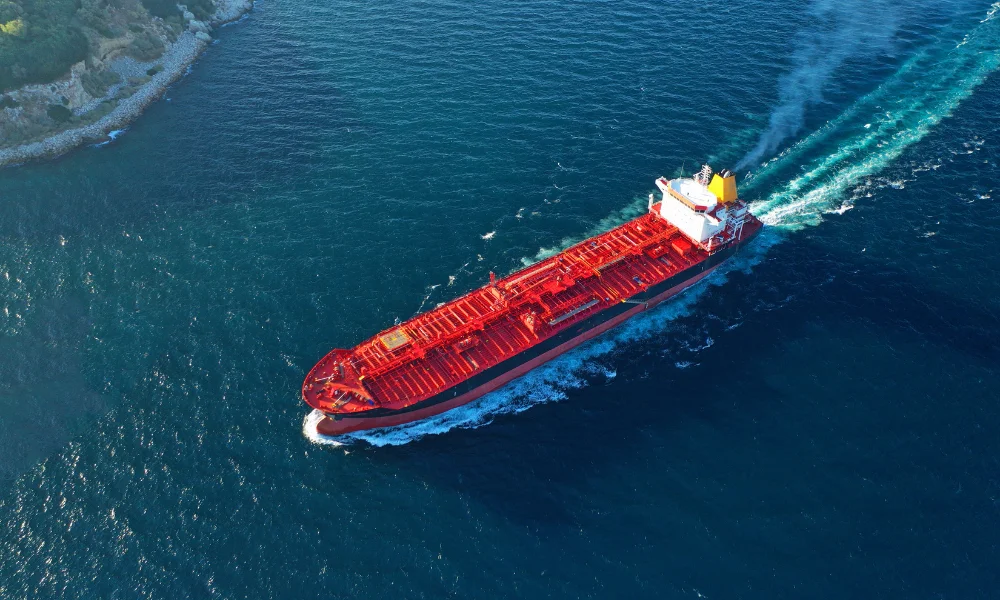
The strait normally carries a significant proportion of global seaborne oil and LNG exports. With its closure announced and reports of attacks on vessels in and around Hormuz and off Oman, owners and charterers are again confronting heightened war-risk exposures.
Hull policies that already classify parts of the region as listed war areas are being reassessed. War underwriters are withdrawing, narrowing or repricing cover and adding countries to high-risk lists. Fixed-premium marine liability markets are issuing cancelation notices for Iran and parts of the Gulf, offering reinstatement only on revised terms.
If ships are detained or effectively trapped on the Gulf side of the chokepoint for an extended period, loss-of-hire wordings and war detention clauses may be triggered. Standard market clauses that treat a vessel detained for 12 months as a constructive total loss raise the prospect of large war claims if transit remains impossible. Any successful strike on a laden tanker would, in turn, create significant pollution and P&I exposure.
Operational risks are also rising. Some operators are reportedly switching off AIS transponders for security reasons, while the region has seen incidents of GNSS jamming and spoofing. Both factors increase collision and grounding risk and may have implications for navigational warranties and cyber or war-related exclusions.
For cargo interests, significant volumes of containerized and bulk cargo are already in transit through the wider region. Diversions around the Cape of Good Hope or to alternative ports add cost, delay and congestion, and will bring delay and non-delivery provisions in cargo wordings under close scrutiny. Where war and strikes are written separately, insurers and insureds will need to distinguish between war, terrorism and political violence triggers, particularly for cargo that is delayed or detained but undamaged.
Airspace closures and restrictions over Qatar, the UAE, Bahrain and Kuwait have led Gulf carriers to ground or reroute large parts of their fleets. Several civilian airports, including Dubai, Abu Dhabi, Bahrain and Kuwait, have been struck by missiles or drones, increasing the risk of aircraft damage or destruction on the ground.
Aviation war markets are issuing review and cancelation notices for affected territories and tightening terms. However, the English Commercial Court’s 2025 decision in AerCap v AIG over aircraft stranded in Russia after the Ukraine invasion complicates the picture. In that case, the court found that aircraft were already within the scope of a war peril before physical loss was finalised.
By analogy, fleets already grounded in high-risk airports may be argued to be within a war peril, potentially leaving war underwriters exposed to subsequent losses unless and until cancelation provisions are properly exercised. Wordings around seven-day notice, territorial exclusions and “in the grip of the peril” concepts are likely to be examined closely.
A prolonged disruption or closure of the Strait of Hormuz risks a sustained energy price shock. Crude and gas prices have already risen on the back of reduced exports from the Gulf and attacks on facilities in Qatar and Saudi Arabia. Further escalation could push oil well above US$100 a barrel and add renewed inflationary pressure globally.
For political risk and trade credit carriers, that scenario raises several concerns: a rise in trade credit and contract frustration claims as buyers struggle with higher input costs and interrupted supplies; non-payment and rescheduling pressures on sovereign and quasi-sovereign borrowers reliant on imported energy; and possible forced-abandonment or expropriation claims if multinational companies evacuate staff and suspend operations in parts of the Gulf and Iran.
Even if a global recession is avoided, localised solvency stress among energy-importing corporates and states could generate higher default rates and claims on non-payment and contract frustration covers.
The speed and complexity of events in the region are also drawing attention to how insurers source and interpret intelligence.
David Heathcote, head of intelligence at McKenzie Intelligence Services, said that in fast-moving conflict situations insurers’ decisions are often constrained by the quality and timeliness of information. In his view, where reliable data is limited, the default response can be to pull back capacity or pause new cover while underwriters work to understand the exposures and the evolving risk environment, even though insureds have limited time to reassess their positions.
Heathcote noted that strikes so far have hit military sites, energy infrastructure, ports, civilian airports and prominent hotels in countries close to Iran, as well as targets in Israel, and that travel disruption and business interruption losses are likely to build as restrictions persist. He also said that the volume and inconsistency of media reporting during conflicts make it difficult for insurers to distinguish signal from noise, increasing the value of verified geospatial and open-source intelligence.
From an industry perspective, conflict zones pose an information challenge as much as a pricing challenge. The ability to combine satellite imagery, on-the-ground reporting and proprietary datasets into near real-time, decision-ready insight will influence how quickly markets can differentiate between temporary volatility and structural shifts in risk, and whether they can maintain cover on a proportionate basis rather than withdrawing capacity until conditions stabilize.