Major event response activated as Middle East crisis rattles insurers
Lloyd's of London has activated its major event response group as the escalating conflict in the Middle East forces the insurance market to confront mounting exposure across aviation, marine, energy, and political violence lines.
The response group is stress-testing syndicate books against the crisis unfolding in and around Iran, though Lloyd's cautioned it is "too early to draw conclusions while the situation continues to evolve."
The activation draws on Lloyd's Realistic Disaster Scenarios framework, a long-standing mechanism that requires every syndicate to model its potential losses against hypothetical catastrophes.
Lloyd's maintains dedicated political risk scenarios as part of this framework, though these are not publicly available.
The system has proven its worth before - Lloyd's had modeled a $60 billion hurricane hitting the Gulf of Mexico before Hurricane Katrina struck in 2005, and market participants have credited that preparation with helping the market absorb the blow.
More recently, Lloyd's own systemic risk research arm Futureset warned in an October 2024 study that a hypothetical geopolitical conflict disrupting trade and supply chains could expose the global economy to losses of $14.5 trillion over five years.
That research specifically flagged the Strait of Hormuz, noting it carries more than 30% of the world's crude oil supply and 20% of global LNG.
Willis is monitoring implications across both aviation and marine. John Rooley, Willis's chief executive of global aviation and space, described the situation as fluid, saying insurers have not yet issued notices of cancelation as aircraft in the region are considered already within the existing "grip of peril."
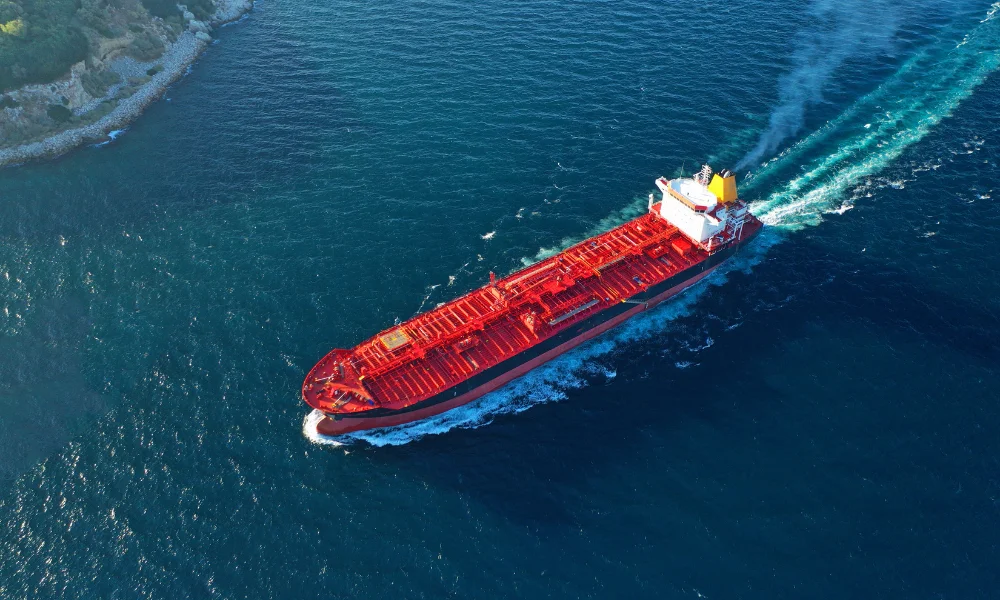
The marine picture is more acute. Simon Lockwood, head of shipowners marine Great Britain at Willis, said reports suggest as many as 3,200 vessels may be unable to exit the Persian Gulf, given the Strait of Hormuz is the only viable route out.
He stressed, however, that war risk coverage remains available despite the London Joint War Committee expanding its designated high-risk area on March 3 to include Bahrain, Qatar, and Oman's coastline.
Read more: War‑risk repricing gathers pace as Gulf tensions disrupt global insurance markets
Marine insurers are nonetheless canceling some war-risk policies, with rates in affected areas potentially rising as much as 50%. Mahesh Mistry, senior director at AM Best, noted that Qatar - one of the world's largest LNG exporters - has shut down production facilities, and that large property risks such as refineries are reinsured internationally, with terms largely driven by foreign-leading reinsurers.
Skuld, the marine P&I mutual, gave notice it will cancel certain war risk covers as of March 5, warning that reinsurer appetite is tightening and capacity withdrawals at short notice are expected.
The most direct precedent is the Iran-Iraq Tanker War of 1980–88, during which roughly 540 vessels were attacked, insurance rates tripled at their peak, yet shipping through the Strait of Hormuz never fully ceased.
Research from the Strauss Center at the University of Texas has found that even during the 1990 Gulf War and 2003 Iraq invasion, coverage remained available - rates peaked at 3.5% of hull value in 2003 before falling back within months.
What distinguishes the current crisis, however, is that two years of Houthi attacks in the Red Sea had already strained global war-risk capacity before hostilities escalated. War risk premiums for Red Sea transits surged twentyfold from late 2023, while transit volumes cratered 65% from 2023 levels by mid-2025.
Munro Anderson of Vessel Protect, part of Pen Underwriting, told Al Jazeera that the market faces "a de facto close of the Strait of Hormuz, based primarily around perception of threat rather than a tangible blockade."
Law firm Stephenson Harwood noted that war risk premiums for Hormuz transits have risen from 0.05–0.15% of hull value to 0.3–0.7% or higher.
Earlier this week, President Trump directed the US International Development Finance Corporation to provide war-risk insurance for Gulf shipping, and said the US Navy would escort tankers "as soon as possible."